

Ofuro: how a Japanese bathing ritual found a home in Kyiv’s forest
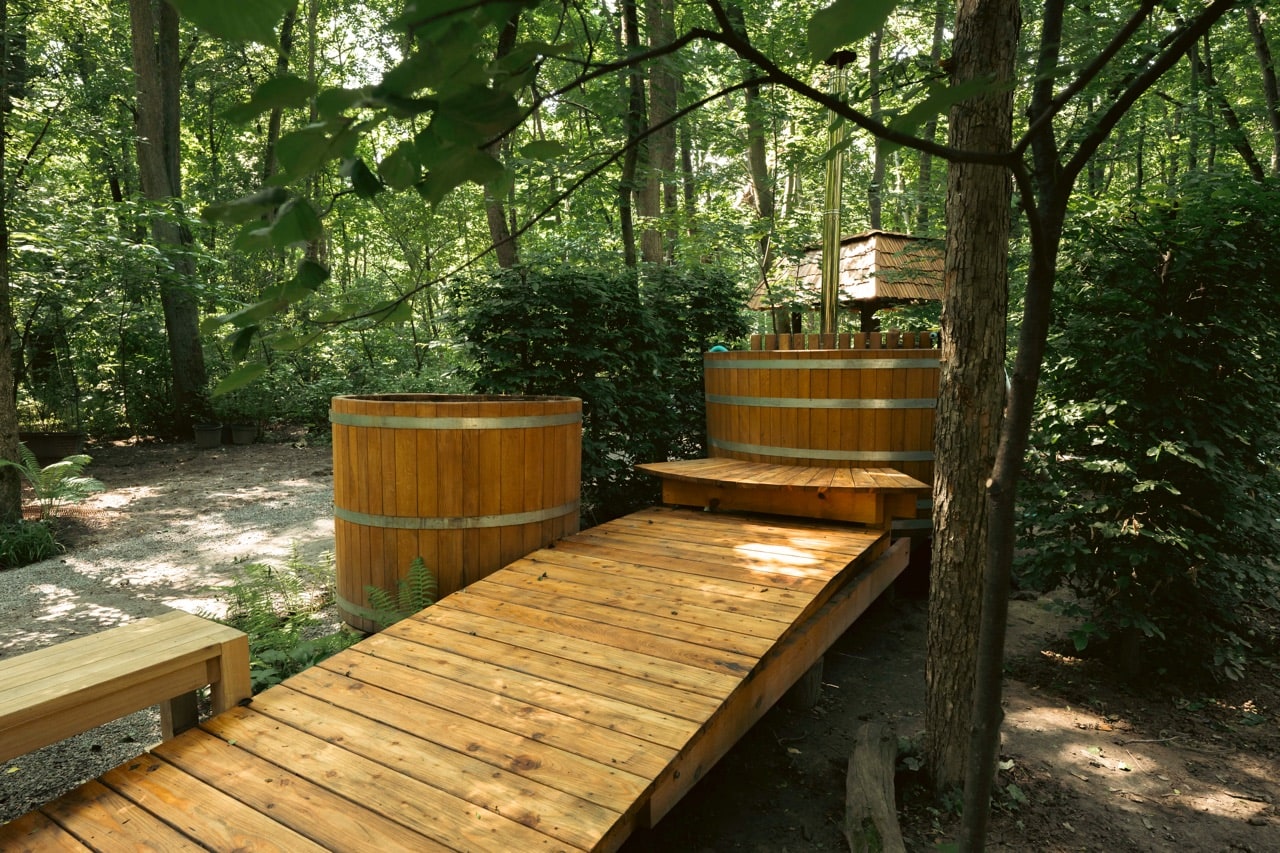
The word ‘ofuro’ is often used as an elegant synonym for a hot tub. In Japanese culture, it has a more specific meaning: a deep bath for quietly warming a body that is already clean. You wash first, then immerse yourself in the water for warmth, a pause and a way to end the day, rather than for hygiene.
At NAMETY, this principle has been given a forest interpretation in Kyiv: a wood-fired hot tub with a lounge area for up to four guests. It is neither a reconstruction of a Japanese bathhouse nor a mineral onsen. It is a contemporary ritual inspired by unhurried soaking in hot water — among the trees at VDNG.
Ofuro, onsen, Jacuzzi and a chan are not the same thing
Ofuro is a general Japanese term for a bath or bathing, often in a deep bath at home. The key principle is to wash thoroughly before getting in so that the water stays clean.
Onsen means bathing in naturally hot mineral water from a thermal spring. NAMETY does not call its hot tub an onsen: there is no natural mineral spring here, and that is a fundamental distinction.
Jacuzzi is usually associated with jets, bubbles and mechanical hydromassage. In a wood-fired tub, the focus is on water, temperature, fire and the surrounding space, rather than aeration.
A Carpathian chan has its own local tradition and often involves a metal vessel over a fire, herbs and temperature contrasts. NAMETY uses the names ‘wood-fired hot tub with lounge’ and ‘ofuro’ because the experience combines wood-fired heating with the idea of quiet, unhurried soaking, broken up by proper rests. The name indicates an inspiration, not that two different bathing traditions are identical.
Why wash before using a hot tub?
The Japanese rule of ‘shower first, bath second’ has a very practical purpose. A shared tub should be entered with a clean body. At NAMETY, you should also shower before soaking, wash off cosmetics and avoid adding your own oils, salts or herbs without the team’s agreement.
It is also a helpful change of pace. The shower separates your city day from the bathing ritual. Instead of dropping straight into hot water after your journey, you first notice the temperature, your breathing and how you feel.
There is no universal duration for the ritual
Traditional etiquette explains why you should wash before getting in, but it does not provide a single number of minutes that will suit every person in every outdoor tub. How it feels depends on the water and air temperatures, wind, recent physical activity, hydration and individual heat tolerance. At NAMETY, ‘slowly’ should mean attentively and without rushing, not for a long time without a break. Get in calmly, notice the first signs of fatigue from the heat and get out before you feel significant discomfort. A pause is part of the ritual, not paid time wasted. If you return to the water, treat it as another short soak rather than a continuation that has to reach a set duration.
What wood-fired heating changes
A wood-fired tub does not work like a bath whose temperature can be set instantly. The water is prepared in advance, warmth spreads gradually, and the weather affects how it feels. Your booking therefore provides a prepared space with a lounge, where soaking alternates with breaks, rather than a promise of uninterrupted time in the water.
The fire is a source of heat, not a separate activity. Do not touch the stove or technical components, or try to change the heating without the NAMETY team. A separate fire area may be a way to end the evening, but use it only in accordance with the site rules and current weather and fire-safety restrictions.
How to enjoy ofuro without overheating
Hot water transfers heat to the body more efficiently than air, so ‘pleasant’ can become ‘too much’ without you noticing. Start with a short soak, do not sit so deeply that breathing becomes difficult, and regularly step out into the air. Keep drinking water nearby.
Dizziness, weakness, nausea, headache, a racing heart or breathlessness are reasons to get out immediately and tell someone nearby. Do not try to ‘stay in for the hour you paid for’: you are booking the space and the ritual, not an obligation to remain in the water throughout.
Alone, as a couple or with a small group
NAMETY’s wood-fired hot tub with lounge accommodates 1–4 people. For a couple, it can be an alternative to a sauna: less discussion of the ‘right steam’ and more time looking out at the forest together. For friends, it offers an intimate get-together without having to shout over music. Alone, the hot water creates room for quiet, but for safety another person should know that you are using the tub.
Alongside the warmth, NAMETY offers cooler options: open air, a shower, cold plunge tubs and tipping buckets. You do not have to use everything. The ritual can be gentle: hot water, a break in the forest, tea and another short soak.
What to bring
- Swimwear and non-slip footwear. Outdoor surfaces and temperatures change with the weather.
- A dry, warm layer. A robe, towel or clothing is there for comfortable breaks, not just for a photograph.
- Drinking water. Tea complements the evening but does not replace plain water.
- Keep cosmetics to a minimum. Wash them off before entering a shared tub.
Before arriving, check with the team what is already included in your booking and what you need to bring yourself. Do not take glass, food or your own aromatic mixtures into the water. This helps keep the ritual calm and safe for every guest.
When a hot tub is not suitable
Do not use ofuro after drinking alcohol, with a fever, during an acute illness or when significantly dehydrated. If you are pregnant, have cardiovascular disease, unstable or low blood pressure, a tendency to faint or another significant medical condition, seek individual advice from a doctor. Hot water can lower blood pressure and cause dizziness when standing up. Cleveland Clinic’s general guidance on hot tubs also emphasises limiting the time spent in the water, drinking water and getting out if you feel dizzy, develop a headache or nausea, or experience other discomfort. These are precautions, not evidence that a hot tub treats any particular condition.
There is no need to call ofuro a ‘Japanese treatment’ for it to have value. Its appeal is simpler: deep warmth, unhurried time in water, the forest around you and a chance to stop optimising anything for a while.
Book a wood-fired hot tub with lounge or combine it with a NAMETY sauna.
Read also: three ways to combine warmth and cold water and why the forest changes how warmth feels.


